Overview
Luxor, nestled along the banks of the Nile River in southern Egypt, is a treasure trove of ancient wonders and cultural riches. Known as the “world’s greatest open-air museum,” this historic city invites visitors to explore its majestic temples, intricate tombs, and vibrant markets. With its rich history and timeless beauty, Luxor offers an unforgettable journey back in time to the glory of ancient Egypt. Welcome to Luxor, where the past comes alive amidst the timeless flow of the Nile.
Info
Luxor, often referred to as the “world’s greatest open-air museum,” is a city in Upper (southern) Egypt that is rich in history and home to some of the most remarkable archaeological sites of ancient Egypt. Here are some key points about Luxor:
Historical Significance:
- Ancient Thebes: Luxor is built on the site of ancient Thebes, the capital of Egypt during the height of its power in the New Kingdom (c. 1550–1069 BC).
- Pharaohs: It was a major center of worship and a burial ground for many of Egypt’s most important pharaohs.
Major Attractions:
- Karnak Temple Complex: A vast mix of decayed temples, chapels, pylons, and other buildings. The Temple of Amun is the largest building in the Karnak complex.
- Luxor Temple: A large Ancient Egyptian temple complex located on the east bank of the Nile River. It was constructed around 1400 BCE.
- Valley of the Kings: Located on the west bank of the Nile, it is the burial site of many pharaohs and nobles. The tomb of Tutankhamun is one of the most famous here.
- Valley of the Queens: The burial place of the queens of the 18th, 19th, and 20th dynasties.
- Mortuary Temple of Hatshepsut: A stunning example of ancient Egyptian architecture dedicated to Queen Hatshepsut.
- Colossi of Memnon: Two massive stone statues of Pharaoh Amenhotep III that stood at the entrance of his mortuary temple.
- Medinet Habu: The mortuary temple of Ramses III, known for its well-preserved reliefs and inscriptions.
Geography:
- Location: Luxor is located on the east bank of the Nile River, about 700 km (435 miles) south of Cairo.
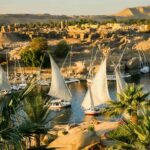
- Nile River: The river plays a central role in the city’s layout and activities, with many attractions on both the east and west banks.
Culture and Economy:
- Tourism: The primary industry, with millions of visitors each year coming to see its historical sites.
- Agriculture: The fertile land around the Nile supports the local economy through agriculture.
- Local Culture: Luxor has a vibrant local culture with bustling markets, traditional music, and festivals.
Modern Luxor:
- Accommodation: Luxor offers a range of accommodations, from budget hostels to luxury hotels.
- Transportation: The city is accessible by air (Luxor International Airport), train, and bus. Nile cruises often start or end in Luxor, providing a scenic way to travel between Luxor and Aswan.
- Development: There have been efforts to preserve and restore its ancient monuments, balancing tourism with conservation.
Luxor continues to captivate historians, archaeologists, and travelers with its rich legacy and well-preserved monuments that offer a glimpse into the grandeur of ancient Egypt.